City Guides
Jimbaran Beach: Seafood, Sunsets, and Where to Stay
A practical guide to Jimbaran Beach: sunset seafood dinners on the sand, the best areas to stay, and what to do beyond the beach.
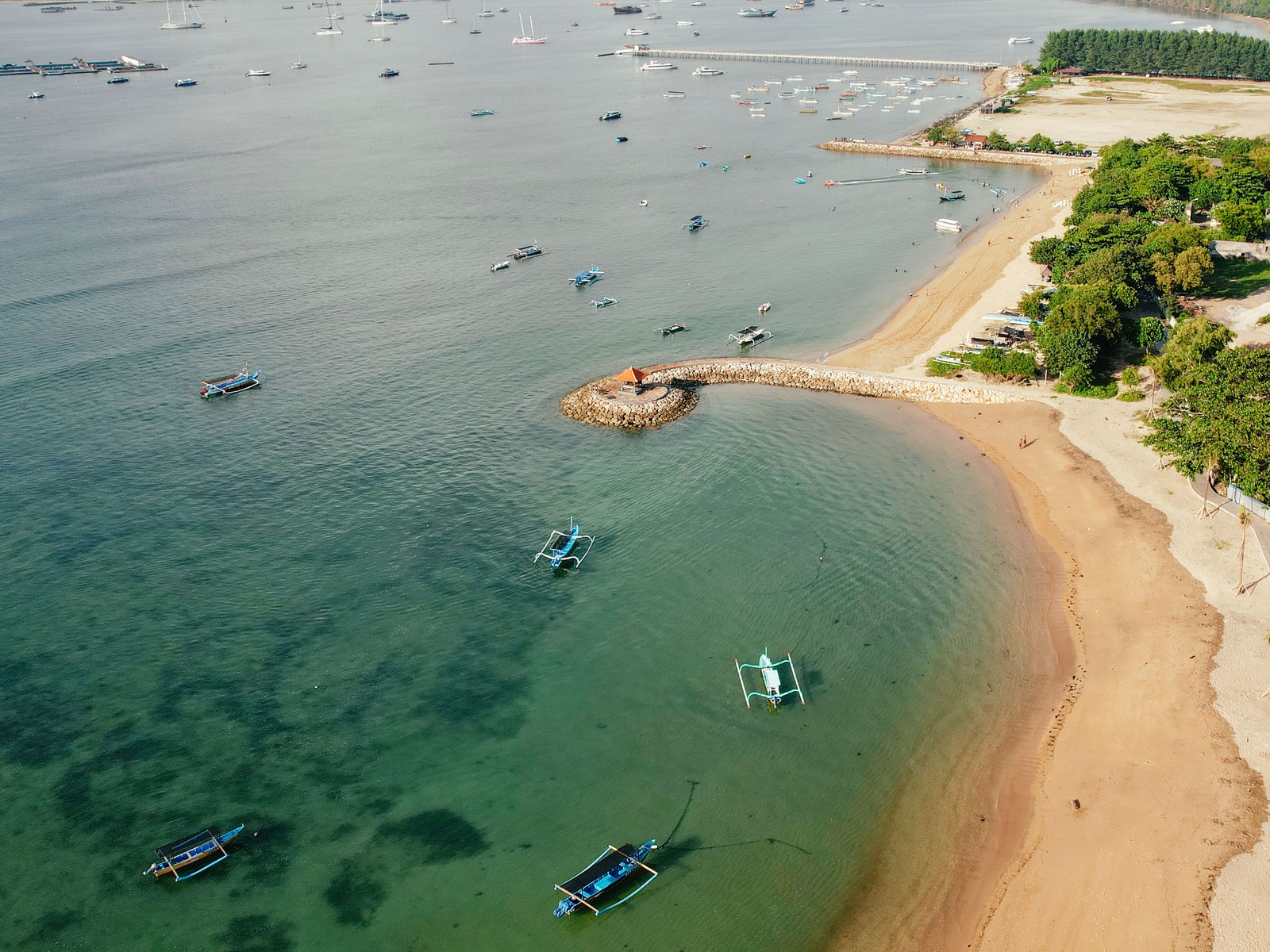
Jimbaran is the quiet answer to south Bali. It sits just below the airport on a sheltered bay, about 4 kilometres of pale sand curving from the runway to the foot of the Bukit cliffs. The water is calm enough for children to paddle in, the sunsets drop straight into the sea, and every evening the beach fills with tables set directly on the sand for grilled seafood. There is no party strip, no beach club queue, and no pressure to do anything at all. If you are planning a first trip to Bali and want a beach base that is close to the airport, easy to swim at, and genuinely relaxing, this is the place to start. Our Bali travel guide for first timers covers the whole island; this guide covers Jimbaran in detail.
At a glance
- The beach: about 4 km of sand in a sheltered bay, calm water, best swimming at high tide, free and open.
- The sunset: the bay faces almost due west. Sunset is about 18:05 to 18:20 from May to November and about 18:45 in January. Arrive 30 to 45 minutes early to claim a table.
- The seafood: grilled fish and shellfish at tables on the sand, priced by weight, about IDR 200,000 to 500,000 per person for a full meal with drinks.
- Getting here: 6 to 10 km from Ngurah Rai International Airport, 15 to 30 minutes in light traffic, 30 to 45 minutes when busy.
- Best time: April to October, the dry season, when the water is clearest and the rain stays away.
- Who it suits: families with young children, couples who want a slow honeymoon base, and anyone arriving late or flying out early.
The beach
Jimbaran Beach is a crescent of fine, light gold sand in a bay that is protected from the big swells hitting the rest of the west coast. The seabed slopes gently, the waves are usually small, knee to waist height through most of the dry season, and there are no reef currents to worry about. That makes it one of the safest swimming beaches in southern Bali. Children can paddle at the edge, families can wade out together, and adults can swim parallel to the shore without being dragged sideways the way they might be at Uluwatu or Canggu. It is calmer than Kuta Beach, and the difference is obvious the moment you step into the water.
The beach has two ends with different characters. The southern end is Muaya Beach, the most active stretch, where the seafood restaurants line the sand and the sunset crowds gather. The northern end is Kedonganan Beach, by the fishing village and the fish market, quieter and more local in feel. In between, the middle of the bay belongs to the big resorts, and the sand in front of them is the emptiest part of the beach during the day. Locals often swim in the water opposite Sundara, while visitors tend to swim opposite the InterContinental. Any of these spots works; the water is the same calm bay throughout.
Swimming is best at high tide. At low tide the water pulls a long way back, about 50 metres in places, and you walk a while before it is deep enough to swim. The water can look cloudy after rain or wind because the sand is stirred up from the bottom, but it is still safe to swim in. Balawista lifeguards patrol parts of the beach, though they do not cover every section all day, so swim in daylight, stay where other people are, and do not go far from shore. During storms the bay can produce large waves, but that is rare. Most of the year, Jimbaran is a non-surfing beach, although on very large swells the southern end can produce a rideable wave for experienced surfers.
The beach is free and open all day. Morning is the quietest time: fishermen have already been out, joggers use the firm sand at low tide, and the restaurants are still stacking their chairs. The beach wakes up in the late afternoon, when the sun drops and the tables come out. If you want a quiet swim, go before 10:00. If you want the sunset scene, be on the sand by 17:30 at the latest.
The seafood dinner
The seafood dinner is the reason most people come to Jimbaran, and it is worth planning one evening around it. The format is the same across the three clusters of beach cafes. Tables and chairs are set directly on the sand, seafood is displayed fresh on ice, you choose your fish and shellfish, it is weighed and priced by weight, then grilled over coconut husks and served with steamed rice, sambal matah, corn, and water spinach. A typical set is grilled fish, prawns, squid, and clams, sometimes with crab or lobster. The meal takes about two hours from sitting down to finishing, and the sun sets in the middle of it.
The best cluster is the central one at Muaya Beach, where Menega Cafe, Lia Cafe, and Jimbaran Cafe sit side by side. This is where the atmosphere, the food quality, and the service come together best. The northern cluster around Kedonganan is closer to the fish market and feels more local. The southern cluster near Jalan Bukit Permai, including Ganesha Cafe and Pandan Sari Cafe, is a little quieter and easier to get a table at. Jimbaran Bay Seafood Club is another established name on the sand. Any of them will do the job; the difference between cafes is smaller than the difference between a good table and a bad one, so pick by location and by how fresh the display looks.
Budget about IDR 200,000 to 500,000 per person for a full meal with drinks. Tour set menus run IDR 350,000 to 500,000 per person. Lobster is the expensive add-on, about IDR 200,000 to 400,000 per kilogram, and it is worth ordering only if you can see that it is fresh. Prices change with the catch and the season, so treat these figures as a guide and check the price before you order. Always ask the price per 100 grams before the fish goes on the grill, and confirm the total before you sit down. The honest cafes will weigh the fish in front of you and write the price down.
A few practical tips. Arrive 30 to 45 minutes before sunset if you want a front table; the best tables go first and the cafes fill up fast in high season. Walk-ins are normal in low season, but a reservation helps on weekends and holidays. Bring cash or a card, and ask which one the cafe prefers, because card machines on the sand are not always reliable. The cafes cook what you choose, and some will also cook seafood you buy yourself at the morning fish market, which is a good option if you want a specific fish. If you eat at a resort restaurant instead, expect resort prices for a similar plate with a view but without the sand between your toes.
Where to stay
Jimbaran’s accommodation splits into three clear layers, and the choice is mostly about budget and how close you want to be to the sand.
Luxury resorts, IDR 3,000,000 and up per night. This is what Jimbaran is known for. The Four Seasons Resort Bali at Jimbaran Bay sits at the southern end of the beach, a village of thatched villas with private plunge pools in gardens that step down to the sand. The InterContinental Bali Resort is the family-friendly flagship in the middle of the bay, about 0.5 km from the beach. AYANA Resort Bali and RIMBA by AYANA sit on the cliffs to the south, with a private beach and the famous Rock Bar, and Raffles Bali and the Mövenpick Resort and Spa Jimbaran Bali complete the top tier. The Mulia is just south toward Nusa Dua, and Six Senses Uluwatu is further south still. These resorts have direct beach or clifftop access, spas, several restaurants, and butler-style service. They suit honeymoons, anniversaries, and travellers booking Bali as a once-in-a-lifetime trip.
Mid-range hotels and villas, IDR 800,000 to 2,500,000 per night. A wide choice of boutique hotels and private pool villas sits in the streets behind the beach and on the hill above the bay. Kayumanis Jimbaran Private Estate and Spa offers private villas for an upscale stay without resort scale. The Holiday Inn Resort Baruna Bali has family rooms and a children’s play area. The FOX Hotel Jimbaran Beach Bali is a practical mid-range base close to the sand. This layer is the best value in Jimbaran: you get a pool, a proper breakfast, and a short walk to the beach for a third of the luxury price.
Budget guesthouses and homestays, IDR 200,000 to 600,000 per night. Family-run guesthouses, simple losmen, and a few hostels sit mostly inland from the beach, along Jalan Uluwatu and around Kedonganan and Tegal Wangi. Puri Sabina Bed and Breakfast and Poedja Villa Jimbaran are well rated budget options with free WiFi. Bali Bobo Hostel, about 1.6 to 2.0 km from the beach, is the social budget choice, with a 24-hour airport shuttle. Hot water and air conditioning are standard at the higher end of this range. If you stay in this layer, budget a short ride or a 15 to 20 minute walk to the beach, and eat at the warungs along Jalan Uluwatu, where a proper Indonesian meal costs very little.
Choose by area as well as by price. The beachfront is closest to the sand and the seafood, and it costs the most. Jimbaran village is quieter and more local, good for travellers who want Balinese life rather than resort life. Jalan Uluwatu is the budget strip, a 15 to 20 minute walk from the beach with warungs and guesthouses. Kedonganan in the north is near the fish market, busier with local life, and good for cheap stays and cheap seafood. The Bukit clifftop resorts to the south offer views and privacy, but you will need a ride to reach the beach. One honest note: hotels at the northern end of the bay can catch aircraft approach noise on some wind days, so if light sleep matters to you, ask the hotel about it before booking. For the wider picture, our guide to where to stay in Bali puts Jimbaran next to the other beach areas.
Getting around
Jimbaran is one of the easiest places in south Bali to reach. The airport is 6 to 10 km away, and the drive takes 15 to 30 minutes in light traffic and 30 to 45 minutes when it is busy. Traffic builds near the airport exit and on Jalan Uluwatu, especially around sunset when everyone heads to the beach for dinner. Late at night or early in the morning, the trip is smooth and fast. If your flight lands in the afternoon, allow the full 45 minutes and do not plan anything tight for your first evening. The practical detail is in our guide to how to get around Bali.
Inside Jimbaran, walking works within one pocket, but it is not practical as your main way of getting around. The beachfront, the village, and the hotel streets are each walkable on their own, but the distances between them add up in the heat. A scooter helps you move through traffic, and rental follows the usual Bali pattern, but skip it if you are inexperienced: the roads toward Uluwatu get busy and aggressive, and the Jimbaran intersection is the main bottleneck for all traffic heading south. Mornings from 07:00 to 09:00 and afternoons from 16:00 to 18:00 are the slowest periods on Jalan Uluwatu. App-based rides and Blue Bird taxis work in Jimbaran, and most hotels will call a car for you. A private driver for a full day follows the usual Bali rate of about IDR 500,000 to 800,000 for 8 to 10 hours, which is the simplest option if you want to combine Jimbaran with Uluwatu or Nusa Dua in one day.
Day trip drives from Jimbaran: Kuta and Tuban take 30 to 45 minutes, Canggu takes 40 to 60 minutes depending on the route, and the Uluwatu temple area takes 30 to 45 minutes. The toll road can sometimes save time toward Jimbaran and the northern side of Uluwatu, so it is worth asking your driver whether it is worth using for your route.
What else to do
Jimbaran is a slow place, and its best non-beach activity is also its most local one. The Kedonganan Fish Market, known locally as Pasar Ikan Kedonganan, sits at the northern end of the bay. Go early in the morning, when the boats have just come in and the stalls are full of tuna, snapper, squid, prawns, and crabs at local prices. It is a working market, not a tourist show, so go to look, ask, and buy, and expect wet floors and strong smells. If you buy fish, some of the beach cafes will grill it for you later in the day, which is the cheapest way to eat well on the sand.
Tegal Wangi Beach is the small hidden beach south of the main bay. It is reached by a short walk and a set of steps down the cliff, and it is known for its sunset and its sea caves at low tide. It is much quieter than Muaya Beach, and it is a good second sunset spot if you want the view without the restaurant crowds. Do not swim here at low tide around the rocks, and check the tide before you go down.
Pura Muaya is the small temple at Muaya Beach that gives the southern beach its name. It is a local temple, not a tourist attraction, so visit quietly and respectfully if you walk past it. Samasta Lifestyle Village is the open-air dining and shopping village near the beach, useful for an evening when you do not want seafood, and for a change of scene after two or three beach dinners in a row.
Day trips
Jimbaran works well as a base for the Bukit Peninsula because everything south is close. Uluwatu Temple is 30 to 45 minutes away, and the same drive reaches the Bukit beaches: Balangan, Dreamland, and Padang Padang. GWK Cultural Park sits between Jimbaran and Uluwatu and pairs well with a temple visit in one afternoon. Nusa Dua and the Tanjung Benoa water sports are within about 30 minutes; the guide to where to stay in Nusa Dua covers the lagoon beach, the resorts, and what to do. Kuta is 20 to 30 minutes away in light traffic, which makes a Kuta evening easy without staying in Kuta. Ubud is the one trip that needs a full day: 1.5 hours or more each way in traffic, so leave early. For the southern beaches in detail, our guide to where to stay in Uluwatu covers the temple, the beaches, and the day trip logic from this side of the island. For the north, Munduk Bali is the waterfall and coffee highlands, 2.5 to 3 hours from the airport.
A relaxed 2-day outline
Day 1, arrive and settle. Land, transfer to your hotel in 15 to 30 minutes, and spend the afternoon on the beach. Swim at high tide, walk the bay from Muaya to Kedonganan, and watch the fishing boats. At 17:30, take a table at one of the Muaya Beach cafes, order the grilled set, and eat with the sunset. Sleep early; you are on holiday.
Day 2, market morning and the south. Wake early and visit the Kedonganan Fish Market, then breakfast at a warung on Jalan Uluwatu. Late morning, drive to Uluwatu Temple and the Bukit beaches, or to GWK if you prefer culture to sand. Return to Jimbaran in the late afternoon, swim once more, and finish with a second seafood dinner at a different cafe, or a quiet meal at Samasta if you have had enough fish.
Common mistakes
- Booking a seafood dinner without checking the price. The fish is priced by weight, and the bill surprises people who do not ask. Always confirm the price per 100 grams before the fish goes on the grill.
- Arriving at sunset and expecting a front table. The best tables are taken 30 to 45 minutes before sunset. Arrive early or accept a table further back.
- Swimming at low tide and being disappointed. The water pulls far back and stays shallow. Swim at high tide, or walk out and wait for it to come back.
- Staying at the northern end and being surprised by aircraft noise. It is not constant, and it does not bother most people, but light sleepers should ask before booking.
- Treating Jimbaran as a day trip base for the whole island. It is perfect for the south and the Bukit Peninsula, but Ubud and the east are long drives. Base yourself here for the south, and move if you want the north.
Checklist
- Check the sunset time for your dates and arrive 30 to 45 minutes early for dinner.
- Ask the price per 100 grams before ordering seafood, and confirm the total.
- Swim at high tide, in daylight, where other people are swimming.
- Bring cash as well as a card for the beach cafes.
- Allow 45 minutes for the airport transfer in the afternoon, 15 to 30 minutes at other times.
- Visit the fish market early in the morning if you want the best catch.
- Check the tide before walking down to Tegal Wangi Beach.
FAQ
Can you swim at Jimbaran Beach?
Yes. The bay is sheltered, the water is calm, and the seabed slopes gently, which makes Jimbaran one of the safest swimming beaches in southern Bali. Swimming is best at high tide, because at low tide the water pulls a long way back. Swim in daylight, where other people are swimming, and do not go far from shore.
How much does the seafood dinner cost?
Budget about IDR 200,000 to 500,000 per person for a full meal with drinks. Tour set menus run IDR 350,000 to 500,000 per person. Lobster costs about IDR 200,000 to 400,000 per kilogram on top. The seafood is priced by weight, so always ask the price per 100 grams before ordering and confirm the total.
Is Jimbaran good for families?
Yes, it is one of the best family bases in south Bali. The water is calm, the beach is wide and free, the resorts are family-friendly, and the airport transfer is short, which matters with young children. The budget guesthouses along Jalan Uluwatu and the mid-range hotels behind the beach keep the cost down.
How far is Jimbaran from the airport?
Jimbaran is 6 to 10 km from Ngurah Rai International Airport. The drive takes 15 to 30 minutes in light traffic and 30 to 45 minutes when it is busy, especially around sunset. It is the closest good beach base to the airport, which makes it a practical choice for an arrival night or a last night.
Is Jimbaran better than Kuta or Seminyak?
It depends on what you want. Jimbaran is calmer, quieter, and easier to swim at, with the best sunset seafood dinners in Bali. Kuta is busier, cheaper, and better for learning to surf. Seminyak has more shops, bars, and beach clubs. If you want a slow beach holiday with good food, choose Jimbaran. If you want nightlife and shopping, choose Seminyak or Kuta and visit Jimbaran for one dinner.
Jimbaran does not try to impress you. It gives you a calm bay, a table on the sand, and a sunset, and it does that better than anywhere else in south Bali. Stay two nights, eat seafood once or twice, swim at high tide, and use it as your base for Uluwatu and the southern beaches. That is the whole plan, and it works.