City Guides
Nusa Dua Beach: Resorts, Things to Do, and Where to Stay
A practical guide to Nusa Dua Beach: calm reef-protected swimming, the best resorts, Tanjung Benoa water sports, and what to do beyond the beach.
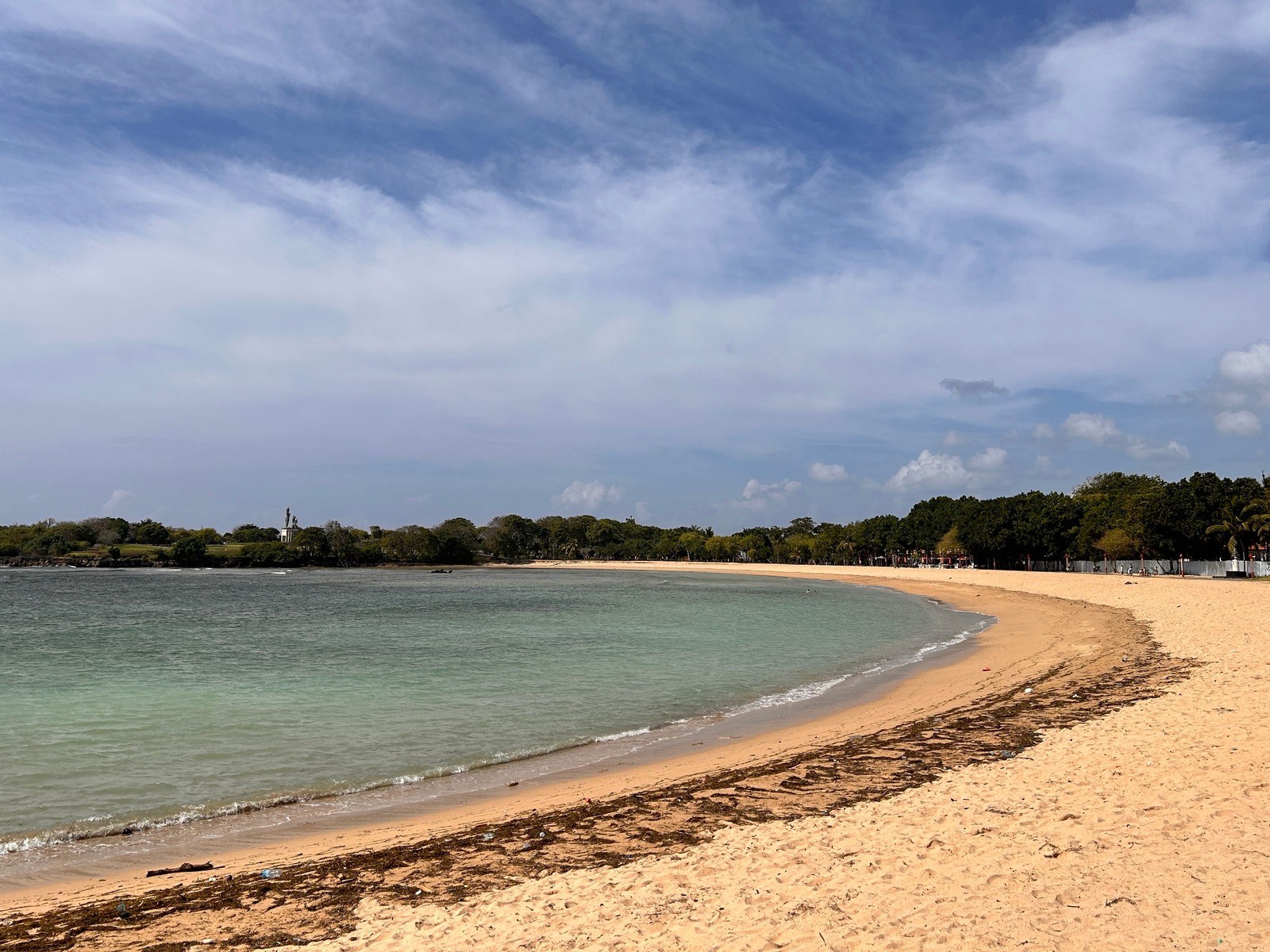
Nusa Dua is the calm answer to south Bali. It sits on the east coast of the Bukit Peninsula, a gated estate of big resorts, wide lawns and white sand that faces the sunrise instead of the sunset. An offshore reef turns the sea into a lagoon, so the water is flat enough for small children to paddle in, and the beach promenade runs for about 7 kilometres behind the hotels. There is no party strip, no surf, and no traffic noise inside the gates. If you are planning a first trip to Bali and want a beach base that is safe for children, easy to reach from the airport, and genuinely relaxing, this is the place to start. Our Bali travel guide for first timers covers the whole island; this guide covers Nusa Dua in detail.
At a glance
- The beach: white sand in a reef-protected lagoon, calm water, best swimming at mid to high tide, free and open.
- The sunrise: the coast faces east. The sun comes up over the sea around 06:00, and the morning walk on the promenade is the best time of day.
- The water sports: parasailing, jet ski, banana boat and seawalker at Tanjung Benoa, just north of the enclave. Book online or agree the price first; walk-up counters quote much higher.
- Getting here: 12 to 15 km from Ngurah Rai International Airport, 20 to 30 minutes in light traffic via the toll road, 30 to 45 minutes when busy.
- Best time: April to October, the dry season, when the water is clearest and the rain stays away.
- Who it suits: families with young children, honeymooners, and first-time visitors who want calm water and a resort that handles everything.
The beaches
Nusa Dua Beach is the main beach of the estate, a long stretch of groomed white sand in front of the central resorts, with a paved promenade running behind it. The seabed slopes gently, the reef takes the energy out of the waves, and the water is usually flat and clear. That makes it one of the safest swimming beaches in Bali. Children can paddle at the edge, families can wade out together, and adults can swim parallel to the shore without fighting a current the way they might at Uluwatu or Canggu. It is calmer than Kuta Beach, and the difference is obvious the moment you step into the water. The beaches here are public even though resorts line them, so you can walk the whole shore without staying at any hotel.
The beach has three main sections with different characters. Nusa Dua Beach itself is the central stretch, the busiest part, where the big resorts sit side by side and the promenade is fullest in the morning. Mengiat Beach, in front of the Grand Hyatt and the Ayodya, is wider and quieter, with warungs and sunbeds on the sand and the best sunrise view in the estate. Geger Beach, just south of the gates below Pura Geger, is the most local of the three: warungs, local families, and seaweed farmers working the shallows at low tide. It is the best choice if you want a quiet swim and a cheap lunch away from the resorts. A small entry and parking fee of about IDR 5,000 applies at Geger.
Swimming is best at mid to high tide. At low tide the water pulls back and the reef shows, and you walk a while before it is deep enough to swim. The water can look cloudy after rain or wind because the sand is stirred up from the bottom, but it is still safe to swim in. There are no surf breaks here, and no reef currents to worry about in the lagoon. The beach is free and open all day. Morning is the quietest and prettiest time: the sun rises over the sea around 06:00, joggers and walkers use the promenade, and the resorts are still setting out their sunbeds. The beach is at its busiest in the late morning, when the day is warmest. If you want a quiet swim, go early. If you want the full resort scene, go mid-morning.
One honest note about the light. Nusa Dua faces east, so it is a sunrise coast. The sun sets behind the island, not into the sea. If a sea sunset matters to you, plan one evening in Jimbaran or Uluwatu instead, and enjoy the sunrise here.
Water sports at Tanjung Benoa
Tanjung Benoa Beach is the peninsula just north of the enclave, a busy 3 km strip with roughly 30 to 40 independent water sports operators. This is where the action is: parasailing, jet ski, banana boat, seawalker, flying fish, snorkelling, and glass-bottom boat trips to Turtle Island. The calm water that makes Nusa Dua safe for children also makes Benoa the best place in Bali to try these activities for the first time.
The activities themselves are straightforward. Parasailing lifts you above the coast for a few minutes with a view of the whole peninsula. Jet skis run 15 minutes with an instructor, which is the sensible option if you have never ridden one. Banana boats need at least two people and last about 15 minutes. Seawalker is a helmet dive: you walk on the sea floor in a helmet with air pumped down from the surface, no diving experience needed, for about 30 minutes. Glass-bottom boats run to Turtle Island, where you can see turtles in a conservation pond.
The prices are the part that needs care. Walk-up counters quote two to four times the online price, so never accept the first number you hear. As a guide, using negotiated or online prices: banana boat IDR 50,000 to 150,000 per person; jet ski 15 minutes with instructor IDR 150,000 to 350,000; parasailing IDR 150,000 to 400,000; seawalker IDR 250,000 to 500,000; a three-activity package IDR 600,000 to 900,000. Turtle Island plus glass-bottom boat runs from about IDR 555,000 per boat. Prices change with the season and the operator, so treat these figures as a guide and check the price before you book.
A few practical warnings. Agree the price in writing before the ride, and book online or through your hotel where possible, because the online price is usually the honest one. Watch out for damage deposits: some operators ask for IDR 500,000 to 2,000,000 in cash before jet ski and parasailing rides, and getting it back can be a negotiation. Ask about the deposit before you pay anything. Go in the morning, when the sea is calmest and the operators are freshest. And wear sunscreen that can survive the water, because you will be out in the sun for hours without noticing it.
Where to stay
Nusa Dua’s accommodation splits into three clear layers, and the choice is mostly about budget and how much resort you want around you.
Luxury resorts, about IDR 2,000,000 and up per night. This is what Nusa Dua is known for. Inside the ITDC enclave, The Laguna, a Luxury Collection Resort and Spa, sits on the main beach with a huge lagoon pool. The Westin Resort Nusa Dua is the family flagship, with a dedicated kids pool and a 12-metre slide. Sofitel Bali Nusa Dua Beach Resort and Grand Hyatt Bali are the other big family resorts in the centre, and Hilton Bali Resort is the cheapest luxury starting rate found, from about IDR 2,110,680. In Sawangan, the southern Luxury Row, The Apurva Kempinski Bali carries a MICHELIN key, The St. Regis Bali Resort has 41 private pool villas with 24-hour butler service, The Ritz-Carlton Bali has private pool villas with a personal butler, and The Mulia and Mulia Resort and Villas has six pools and seven restaurants. Conrad Bali, Ayodya Resort Bali, Melia Bali, Merusaka Nusa Dua and The Crystal Luxury Bay complete the top tier. These resorts have direct beach access, spas, several restaurants, kids clubs and butler-style service. They suit honeymoons, anniversaries, and travellers booking Bali as a once-in-a-lifetime trip.
Mid-range hotels, IDR 800,000 to 2,500,000 per night. There are few mid-range options, and most sit just outside the enclave. Novotel Bali Nusa Dua, near Geger Beach, is good value for families and longer stays. Mercure Bali Nusa Dua sits near Bali Collection with a shuttle to the beach. This layer is the best value in Nusa Dua if you want the area without the resort price: you get a pool, a proper breakfast, and a short ride to the sand.
Budget guesthouses and homestays, IDR 200,000 to 600,000 per night. There is almost nothing in this layer inside the enclave. Family-run guesthouses and simple homestays sit in Bualu, just west of the gates, and in Tanjung Benoa to the north. Tanjung Benoa is the more affordable base near Nusa Dua, with beachfront hotels, local restaurants and the water sports strip. If you stay in this layer, budget a short ride to the beach, and eat at the warungs on Jalan Pantai Mengiat and Jalan Srikandi in Bualu, where a proper Indonesian meal costs very little.
Choose by area as well as by price. The ITDC enclave is the central resort core, with Bali Collection, the golf course and the convention centres. Sawangan in the south holds the newest luxury resorts and a quieter beach. Tanjung Benoa in the north is casual, closer to the water sports, and more affordable. Bualu west of the gates is the everyday town, good for cheap food and a look at local life. One honest note: Nusa Dua is a resort estate, not a town. Eating and drinking inside the resorts is charged at international rates, and there is almost no nightlife. If you want local life, walk out of the gates to Bualu or drive to Jimbaran for dinner. For the wider picture, our guide to where to stay in Bali puts Nusa Dua next to the other beach areas.
Getting around
Nusa Dua is one of the easiest places in south Bali to reach. The airport is 12 to 15 km away, and the drive takes 20 to 30 minutes in light traffic and 30 to 45 minutes when it is busy. The fastest route is the Bali Mandara Toll Road, a raised road over Benoa Bay that skips the traffic on the main road south of the airport, so ask your driver to use it. Late at night or early in the morning, the trip is smooth and fast. If your flight lands in the afternoon, allow the full 45 minutes and do not plan anything tight for your first evening. The practical detail is in our guide to how to get around Bali.
A private car from the airport costs about IDR 250,000 to 350,000 per car for up to four passengers with luggage. A taxi costs about IDR 130,000 to 160,000. App rides run about IDR 128,000 on Grab and IDR 148,500 on Gojek. There is no public bus or shuttle to Nusa Dua, so one of these is your only option. Most resorts offer their own airport pickup for a similar price, and it is the simplest choice with luggage and tired children, because the driver meets you in the arrivals hall.
Inside the enclave, walking works. The promenade and the wide sidewalks link the resorts, Bali Collection and the beaches, and it is the only area in Bali where you can walk between hotels without dodging motorbikes. A scooter is possible but the enclave is built for walking and resort shuttles, and for trips outside the gates a private driver for a full day follows the usual Bali rate of about IDR 500,000 to 800,000 for 8 to 10 hours, which is the simplest option if you want to combine Nusa Dua with Uluwatu or Jimbaran in one day.
Day trip drives from Nusa Dua: Jimbaran takes 20 to 35 minutes, Uluwatu Temple takes 30 to 45 minutes, Sanur takes 25 to 45 minutes, Kuta takes 30 to 45 minutes, Seminyak takes 45 to 75 minutes, Canggu takes 1.5 to 2.5 hours, and Ubud takes about 1.5 to 2 hours. Sanur harbour, where every fast boat to Nusa Penida leaves from, is 30 to 45 minutes away, and hotel pickups for the morning boat run about 06:15 to 06:30.
What else to do
Nusa Dua is a slow place, and its best non-beach activities are all inside or just outside the gates. Waterblow is a jagged limestone shelf at the edge of the estate where Indian Ocean swells hit the rock and fire spray metres into the air, up to 30 metres on a big day. It only happens at high tide, so time your visit for high tide and expect very little on a flat day. A small entry fee applies, but the figure varies by source, so carry a little cash. Next to it, Peninsula Island is a landscaped headland that ITDC is redeveloping in phases. It stays open during the works, but check access before you go, because the 2026 rejuvenation programme has changed the entrances.
Puja Mandala is the most unusual sight in the area: five working houses of worship side by side on a hillside in Kampial, about 4 km west of Bali Collection. A mosque, a Catholic church, a Protestant church, a Hindu temple and a Buddhist temple share one compound, inaugurated in 1997 as a statement of religious harmony. Entry is free, donations are welcome, and about 20 minutes is enough. Each building is in active use, so look from the courtyard and step inside only where doors are open, and cover your shoulders and knees. Pura Geger is the cliff-top temple above Geger Beach, an active temple with no fixed ticket, only a donation box.
Museum Pasifika is a private art museum inside the estate with more than 600 works from Indonesia, the Pacific and Asia across 10 pavilions, including works by artists who painted in Bali. It opens daily from 10:00 to 18:00, with last entry at 17:00, and adult tickets run about IDR 70,000 to 100,000 depending on where you buy. It is the best rainy-day option in Nusa Dua. Bali Collection is the open-air mall at the heart of the enclave, with international brands, local boutiques, restaurants and a cinema. Entry is free, and it is useful for an evening when you do not want a resort dinner.
In the evening, the Devdan Show, “Treasure of the Archipelago”, runs at the Bali Nusa Dua Theatre inside the ITDC complex. It is a 90-minute stage show through the cultures of Indonesia’s islands, with dance, acrobatics and costumes, typically on Monday, Wednesday and Saturday at 19:30, with extra shows in peak season. Tickets run from about IDR 200,000 for Indonesian residents and IDR 300,000 for foreign tourists for the cheapest seats, up to IDR 600,000 and IDR 800,000 for the best seats. Book ahead in high season. The Bali National Golf Club, also inside the enclave, is one of Bali’s most respected golf courses, if golf is part of your trip.
Day trips
Nusa Dua works well as a base for the south because everything is close and the toll road keeps the airport run short. Uluwatu Temple is 30 to 45 minutes away, and the same drive reaches the Bukit beaches. Go in the afternoon for the temple at sunset and the Kecak dance, and come back the same evening. Jimbaran is 20 to 35 minutes away, which makes a seafood dinner on the sand an easy evening without staying there. For the southern beaches in detail, our guide to where to stay in Uluwatu covers the temple, the beaches, and the day trip logic from this side of the island.
Sanur is 25 to 45 minutes away, and its harbour is where every fast boat to Nusa Penida leaves from. A Nusa Penida day trip from Nusa Dua means a 30 to 45 minute drive to Sanur, then a 30 to 45 minute boat crossing, so leave early: hotel pickups for the morning boat run about 06:15 to 06:30. Our guide to where to stay in Sanur covers the harbour town and the island boats. Kuta is 30 to 45 minutes away, which makes a Kuta evening easy without staying in Kuta. Ubud is the one trip that needs a full day: about 1.5 to 2 hours each way in traffic, so leave early and treat it as a day, not a half day. For the north instead, Munduk Bali is the cool waterfall highlands, 2.5 to 3 hours from the airport.
A relaxed 2-day outline
Day 1, arrive and settle. Land, transfer to your resort in 20 to 30 minutes, and spend the afternoon on the beach. Swim at high tide, walk the promenade from Mengiat north toward Tanjung Benoa, and watch the sun set behind the island from the sand. Eat at your resort or walk out to Bualu for a cheap warung dinner. Sleep early; you are on holiday.
Day 2, water sports and the south. Wake early for the sunrise walk on the promenade, then breakfast at the resort. Late morning, drive to Tanjung Benoa for the water sports: parasailing first, then jet ski and banana boat, with the price agreed before each ride. Afternoon, visit Waterblow at high tide and walk Peninsula Island, then Puja Mandala on the way back. Finish with the Devdan Show in the evening if it is a show night, or a quiet dinner at Bali Collection.
Common mistakes
- Accepting the first water sports price. Walk-up counters quote two to four times the online price. Book online or agree the price in writing before the ride.
- Paying a damage deposit without asking. Some operators ask for IDR 500,000 to 2,000,000 in cash before jet ski and parasailing rides. Ask about the deposit before you pay anything.
- Coming for a sea sunset. Nusa Dua faces east. The sunrise is the main event; the sun sets behind the island.
- Swimming at low tide and being disappointed. The water pulls back and the reef shows. Swim at mid to high tide.
- Eating every meal inside the resort. Resort dining is charged at international rates. Walk out to Bualu for warung prices at least once.
- Treating Nusa Dua as a day trip base for the whole island. It is perfect for the south and the Bukit Peninsula, but Ubud and the east are long drives. Base yourself here for the south, and move if you want the north.
Checklist
- Book water sports online or agree the price in writing before the ride.
- Ask about damage deposits before paying for jet ski or parasailing.
- Swim at mid to high tide, in daylight, where other people are swimming.
- Walk the promenade at sunrise, around 06:00.
- Time Waterblow for high tide and carry a little cash for the entry fee.
- Walk out to Bualu at least once for a cheap warung meal.
- Allow 45 minutes for the airport transfer in the afternoon, 20 to 30 minutes at other times.
- Check access to Peninsula Island before you go, because of the 2026 works.
FAQ
Can you swim at Nusa Dua Beach?
Yes. An offshore reef turns the sea into a calm lagoon, which makes Nusa Dua one of the safest swimming beaches in Bali. Swimming is best at mid to high tide, because at low tide the water pulls back and the reef shows. Swim in daylight, where other people are swimming, and do not go far from shore.
How much do the Tanjung Benoa water sports cost?
Using negotiated or online prices as a guide: banana boat IDR 50,000 to 150,000 per person, jet ski 15 minutes with instructor IDR 150,000 to 350,000, parasailing IDR 150,000 to 400,000, seawalker IDR 250,000 to 500,000, and a three-activity package IDR 600,000 to 900,000. Walk-up counters quote much higher, so book online or agree the price before the ride, and ask about damage deposits before you pay.
Is Nusa Dua good for families?
Yes, it is one of the best family bases in Bali. The water is calm, the beach is wide and free, the resorts are built for families with kids clubs and children’s pools, and the airport transfer is short, which matters with young children. The Westin, Grand Hyatt, Hilton, Conrad, Sofitel and Mulia are all strong family choices, and Tanjung Benoa adds water sports that children can join.
How far is Nusa Dua from the airport?
Nusa Dua is 12 to 15 km from Ngurah Rai International Airport. The drive takes 20 to 30 minutes in light traffic via the Bali Mandara Toll Road and 30 to 45 minutes when it is busy. A private car costs about IDR 250,000 to 350,000, and a taxi costs about IDR 130,000 to 160,000. There is no public bus or shuttle.
Is Nusa Dua better than Kuta or Seminyak?
It depends on what you want. Nusa Dua is calmer, quieter, and easier to swim at, with the best resorts and the easiest airport transfer in south Bali. Kuta is busier, cheaper, and better for learning to surf. Seminyak has more shops, bars, and beach clubs. If you want a slow resort holiday with good food and calm water, choose Nusa Dua. If you want nightlife and shopping, choose Seminyak or Kuta and visit Nusa Dua for one day.
Nusa Dua does not try to impress you. It gives you a calm lagoon, a long promenade, and a resort that handles everything, and it does that better than anywhere else in south Bali. Stay two nights, swim at high tide, walk the promenade at sunrise, and use it as your base for Uluwatu, Jimbaran and the southern beaches. That is the whole plan, and it works.