City Guides
Kuta Beach: Surf, Sunsets, and Where to Stay
A practical guide to Kuta Beach: beginner surf, sunsets, the best areas to stay, and what to do beyond the sand.
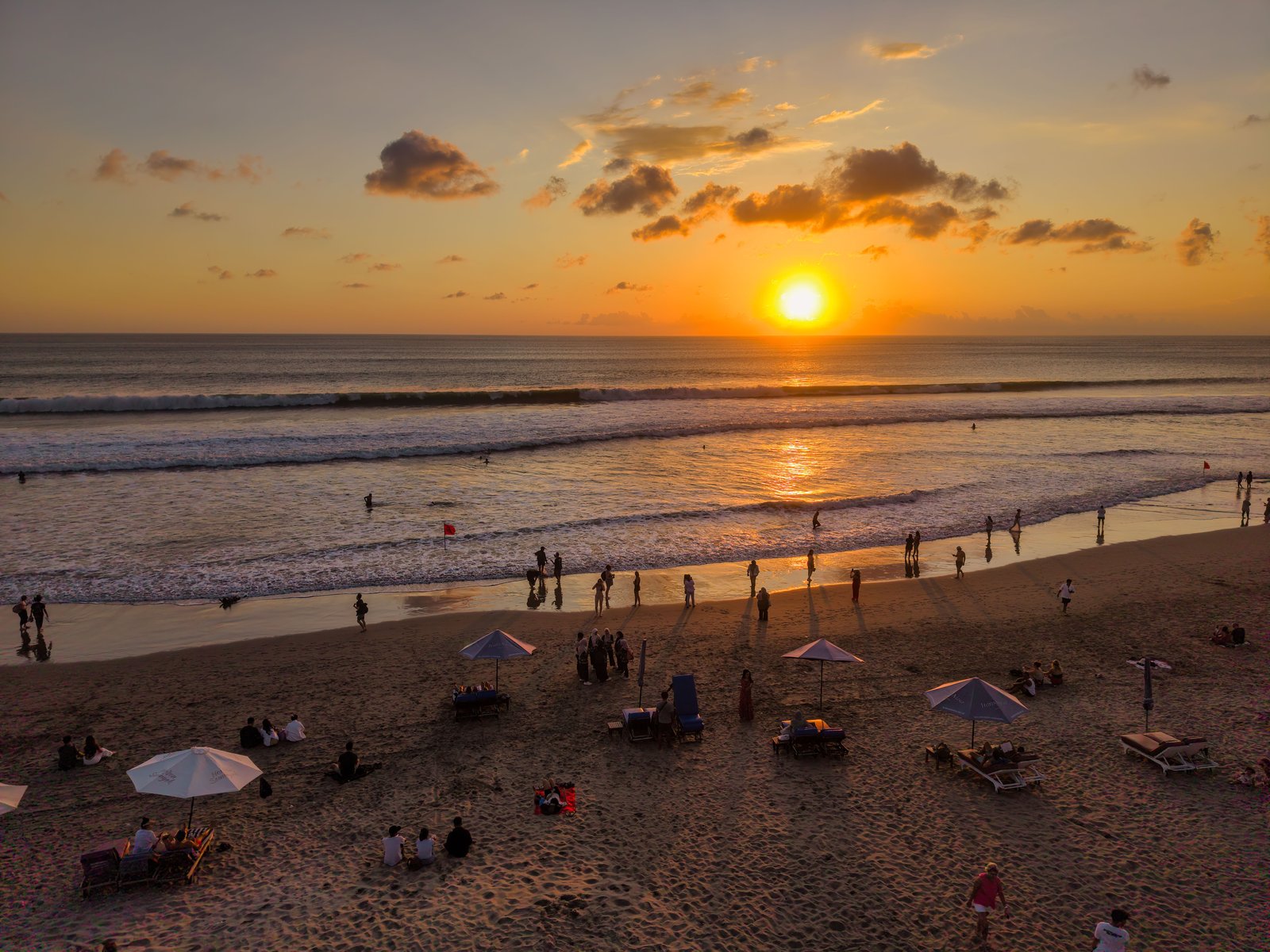
Kuta is where Bali’s tourism story started, and it still does the job it has always done: it gives first timers a beach, a surfboard, a sunset, and a bed, all within walking distance of each other. The beach runs about 2.5 kilometres along the southwest coast, facing straight into the sunset. Behind it sits the busiest strip in Bali, a grid of shops, warungs, bars, and hotels that never really sleeps. Kuta is not the quiet Bali, and it does not pretend to be. It is the practical Bali: the closest beach to the airport, the best place on the island to learn to surf, and the cheapest base in the south for travellers who want the beach and the buzz without paying Seminyak prices.
That honesty matters, because Kuta divides opinion. Some travellers love the energy and the value. Others find it too loud, too crowded, and too full of touts. Both reactions are fair, and both come from the same facts. This guide sets out those facts, area by area, so you can decide whether Kuta fits your trip, and if it does, which part of it to stay in.
At a glance
- Where: Kuta sits on Bali’s southwest coast, in Badung Regency, just north of the airport. The beach faces west.
- Best for: First timers, budget travellers, beginner surfers, and anyone who wants shops, food, and nightlife on foot.
- Not for: Travellers who want quiet, culture, or a luxury resort feel. For calm water and a slower pace, read our guide to where to stay in Sanur instead.
- The beach: About 2.5 kilometres of sand, free to enter, open 24 hours. Beginner surf, lifeguards in the day, and a famous sunset.
- Getting there: Ngurah Rai International Airport is 3 to 6 kilometres away. The drive takes 10 to 20 minutes in light traffic and 20 to 45 minutes at peak times. An official airport taxi costs about IDR 100,000 to 200,000.
- Budget: Guesthouses from around IDR 200,000 a night, surfboard rental from about IDR 50,000 a day, a group surf lesson about IDR 300,000 to 500,000 for two hours. Prices change, so treat these as a starting point and confirm before you book.
- Stay: Two to three nights is enough for most people. Longer works if you surf every day or use Kuta as a cheap base for day trips.
Where to stay in Kuta
Greater Kuta is really four areas with different prices, noise levels, and atmospheres. Choosing the area matters more than choosing the hotel, because the strip is small enough to walk across, but loud enough that a few streets make a real difference to your sleep.
Central Kuta and the Poppies Lanes
Central Kuta is the busy heart: Jalan Legian, Kuta Square, and the two Poppies Lanes that run from Legian Street down to the beach. This is where the budget guesthouses, the cheap eats, and the late-night bars cluster. Poppies Lane 1 and Poppies Lane 2 are narrow lanes packed with small hotels, warungs, laundries, and money changers, and they are the best value in south Bali. A clean room with a fan or air conditioning and a pool can cost half what the same room costs in Seminyak.
The trade-off is noise and touts. Central Kuta is loud late into the night, and you will be offered massages, transport, and tours every few steps. If you are young, travelling light, and out most of the day, that is a fair price for the location. If you are a light sleeper, pick a hotel set back from the main street, or stay in Legian instead.
Legian
Legian sits just north of central Kuta, and it feels like Kuta with the volume turned down a notch. The beach is the same stretch of sand, with the same gentle surf and a paved beachfront path, but with slightly fewer people. The streets are a little wider, the hotels a little calmer, and the restaurants a little more spread out. Legian suits couples and families with older children better than central Kuta does, and it is the best compromise if you want to be close to Kuta’s energy without sleeping in it. You can walk from Legian to central Kuta in about 15 minutes, or take a short taxi ride for a few dollars.
Tuban
Tuban is the southern end, between central Kuta and the airport, and it is the quietest of the four. The streets are wide enough for strollers, the hotels are mostly mid-range resorts with pools and gardens, and Waterbom Bali and Discovery Shopping Mall are a short walk away. Tuban suits families with young children best: Tuban Beach can have rocks at low tide, so check the sand before you let children paddle, but the area itself is calm, and the airport is 10 minutes away. If you land late or fly out early, one night in Tuban is the most practical choice in Bali, because no other beach area is this close to the terminal.
Who should stay where
- Solo travellers and backpackers: Poppies Lanes or Kuta Square, for the price and the social scene.
- Couples: Legian, for a calmer base with the same beach.
- Families with young children: Tuban, for wide streets, resort pools, and Waterbom nearby.
- Surfers: Anywhere near the beach works, but Legian gives you the same waves with fewer people in the water.
- One-night stopovers: Tuban, because it is minutes from the airport.
The beach: surf, swimming, and sunsets
Kuta Beach is the reason the area exists. It is a wide, open beach with soft sand and a sandy bottom, no reef, and waves that break gently over sandbars. That combination is why Kuta is Bali’s classic place to learn to surf: the waves are consistent enough to practise on every day, and the falls hurt less than they do on a reef break.
Learning to surf
Dozens of surf schools and beach instructors work along the sand, and you can rent a board or book a lesson on the spot. Board rental starts from about IDR 50,000 an hour, or about IDR 50,000 to 100,000 for a full day, depending on the board and how hard you bargain. A two-hour group lesson costs about IDR 300,000 to 500,000, and private lessons cost more. Prices vary between schools, so confirm the full price, the lesson length, and what is included before you pay. Ask whether the price covers the board, a rash vest, and insurance, and what happens if the session is cancelled for bad conditions.
Most first timers can stand up on the board and ride a wave toward the shore within a single two-hour session. The best time to learn is the morning, when the wind is light and the beach is quieter. Surf in the late afternoon too, but be ready for more people in the water. If you already surf, Kuta’s waves will feel small after a few days, and you will want to move on to Canggu or Uluwatu. That is normal. Kuta is a first step, not a final destination, for surfers.
Swimming safely
Swimming at Kuta needs more care than it looks. The same waves that make it good for surfing create rip currents, and they can pull hard, especially at mid to high tide and in bigger swells during the dry season. Balawista lifeguards patrol the main stretch from 06:00 to 17:00, and red and yellow flags mark the swimming zones. Swim only between the flags, and stay out of the water entirely if you see a single red flag. If a current catches you, do not fight it. Float, raise your arm, and swim parallel to the shore until the pull stops.
Children need constant supervision near the shoreline, because the waves and currents change quickly. Do not swim after dark: visibility is poor, the lifeguards are gone, and the currents are hard to read. The sun is extreme year-round, with UV usually very high by 10:00, so use reef-safe sunscreen and a hat, and reapply often.
Sunsets and the beach at the end of the day
Kuta faces west, so the sunset lands straight over the sea, and the beach fills up in the last hour of light. Beach chairs with umbrellas cost about IDR 50,000, and a set of an umbrella with two sunbeds costs about IDR 100,000 for the day. Beach massages start from about IDR 75,000 an hour. Agree on the price before you sit down or lie down, because the price is whatever you agree, not whatever is printed anywhere.
Hawkers are part of the Kuta beach experience, and they are persistent. A polite “no, thank you” usually ends it, but expect to say it many times. Do not leave phones or wallets unattended on the sand. Petty theft is the main risk on the beach, and a hostel locker is safer than a bag on a towel.
One honest note: parts of the Kuta, Legian, and Seminyak coastline have coastal conservation works running during 2026, so some sections of beachfront may have fences or machinery. Check the access signs at your hotel before you pick a spot.
Beyond the beach
Kuta has more than sand, and a day here works best when you mix the beach with one or two of these.
Waterbom Bali
Waterbom Bali is a water park on Jalan Kartika Plaza in Tuban, about 5 kilometres from the airport by road. It has slides from gentle lazy river floats to steep, high speed drops, and it is the best rainy day option in the south. It opens from 09:00 to 18:00 every day and closes only on Nyepi.
Tickets are where you need to check carefully, because prices differ by residency. International visitors pay about IDR 630,000 for an adult single day pass and IDR 495,000 for a child aged 2 to 11. Indonesian residents pay about IDR 289,000 for a single day pass, and a family pass for two adults and two children costs about IDR 961,000. Towels, lockers, food, and the FlowRider are charged separately, and an all-in pass for adults costs about IDR 885,000 and bundles a towel, a locker, and IDR 200,000 of credit. Confirm the current price on the official site before you go, because these figures change.
The Bali Bombing Memorial
The Bali Bombing Memorial, also known as the Ground Zero Monument, stands on Jalan Legian, where Paddy’s Pub and the Sari Club once stood. On the evening of 12 October 2002, two bombs exploded at those venues and killed 202 people from 22 countries, including 88 Australians and 38 Indonesians. The memorial was dedicated on 12 October 2004, exactly two years later. It is a carved stone monument with a marble plaque listing every victim’s name, a flame that burns continuously, and the Garuda Pancasila emblem at the top.
It is free, open to the public every day, and worth ten quiet minutes, especially at night when it is lit. A memorial service is held here every year on 12 October. It sits in the middle of the nightlife strip, which makes the contrast with the bars around it all the more striking.
Kuta Art Market and shopping
The Kuta Art Market, known locally as Pasar Seni Desa Adat Kuta, sits on Jalan Bakung Sari, a short walk from the beach. It has six main shophouses and a long building full of stalls selling sarongs, wooden carvings, shell jewellery, beach dresses, and Bintang singlets. It opens daily from about 08:00 to 22:00, entry is free, and bargaining is expected. Morning is the best time to visit, before the heat and the crowds.
For everything else, Kuta is the shopping capital of south Bali. The Beachwalk Shopping Center sits right on the beachfront, and the Discovery Shopping Mall and Lippo Mall Kuta cover the southern end. Kuta Square has the Matahari department store and rows of surf shops and souvenir stalls. If you need a SIM card, a cheap bag, or a new swimsuit, you will find it here faster than anywhere else on the island.
Nightlife, briefly
Jalan Legian is Bali’s original nightlife strip, with bars and clubs that stay open late. It is loud, crowded, and not for everyone, and that is fine. If you go out, stay with your group, watch your drink, and do not buy unlabeled spirits. Kuta’s nightlife is fun, but it is also where most of Bali’s tourist trouble happens, and a little caution goes a long way.
Eating in Kuta
Kuta is the best place in south Bali to eat cheaply and well without trying hard. Poppies Lane is the heart of it: narrow lanes full of warungs serving nasi goreng, mie goreng, satay, and fresh fruit for a few dollars, alongside small cafes with smoothie bowls and decent coffee. The food here is simple and honest, and a meal for two with drinks rarely costs more than IDR 150,000.
Beyond the lanes, the range is wide. Beachfront cafes serve seafood and sunset views at higher prices, Jalan Legian has everything from Australian pubs to Japanese restaurants, and the malls have food courts for air-conditioned eating. If you want Indonesian food specifically, walk a street or two back from the beach, where the warungs cater to locals as well as tourists, and the prices drop. A good rule: if the menu has photos of every dish and a tout outside, keep walking.
Getting around Kuta
Kuta is small enough to walk, and walking is usually the best option. The beachfront path runs from Tuban in the south to Legian Beach in the north, and Jalan Legian runs parallel to it a few hundred metres inland, connecting the shops, restaurants, and bars. Central Kuta to Legian is about a 15-minute walk along the beach.
The traffic is the problem. Jalan Legian and Jalan Kartika Plaza jam badly in the late afternoon, and a short taxi ride can take 20 minutes. A scooter is faster, but only if you are confident riding in dense traffic with no lanes to speak of, and you hold a motorcycle licence and a motorcycle-category international driving permit. For the full picture on scooters, taxis, and ride-hailing in Bali, read our guide to how to get around Bali.
Taxis are everywhere. Blue Bird runs on the meter and is the safest bet. Grab and Gojek work in Kuta, though pickup points near the beach can be restricted, so walk a short distance inland to meet your driver. Agree the fare before you get in a non-metered taxi. For short hops, the fare should be small. If a driver quotes a big number, walk away and try the next one.
Day trips from Kuta
Kuta works well as a cheap base for the south, because everything is close. Seminyak is 10 to 20 minutes north, with better restaurants and beach clubs. Canggu is about 30 to 45 minutes north, with surf and cafes. Uluwatu is 45 minutes to an hour south, with the temple, the Kecak dance, and the cliff beaches. Sanur is about 45 minutes to an hour east, and its harbour has the boats to Nusa Penida. Ubud is an hour to an hour and a half inland. Jimbaran Beach is 30 to 45 minutes south, calmer than Kuta, with seafood dinners on the sand at sunset; see Jimbaran Beach. If you are planning a longer trip, our Bali itinerary 5 days shows how to fit Kuta into a first week. Nusa Dua is about an hour east, calmer than Kuta, with a reef-protected lagoon and the island’s biggest resorts; see where to stay in Nusa Dua. Munduk is the far north option, the cool waterfall highlands 2.5 to 3 hours away; see Munduk Bali.
A practical tip: leave early for day trips. The roads out of Kuta clog from mid-morning, and a 45-minute drive can double. Hire a driver for the day if you want to visit two or three places. It costs about IDR 500,000 to 800,000 for 8 to 10 hours, and it removes the parking and traffic stress entirely.
A two-day Kuta outline
Day 1: Beach and surf. Morning surf lesson at Kuta Beach, starting around 08:00 when the wind is light. Lunch at a warung on Poppies Lane. Afternoon at the Kuta Art Market and Kuta Square, then back to the beach for sunset with a chair and an umbrella. Dinner on Jalan Legian, and a short walk through the nightlife strip if you are curious.
Day 2: Waterbom and the quieter end. Morning at Waterbom Bali in Tuban, arriving at opening time to beat the queues. Lunch in Tuban, then a walk north along the beachfront path to Legian for a calmer afternoon swim between the flags. Stop at the Bali Bombing Memorial on the way back for ten quiet minutes. Finish with dinner at a beachfront cafe and a last sunset.
If you have more time, add a third day for a trip to Uluwatu or a boat day to Nusa Penida from Sanur, and read our guide to where to stay in Bali for how Kuta fits into a wider first trip.
Common mistakes
- Staying in central Kuta with a toddler. The noise, the crowds, and the touts make it exhausting. Stay in Tuban or Legian instead.
- Swimming outside the flags. The rip currents are real, and strong swimmers are not immune. Swim between the flags or not at all.
- Paying the first price. Surf lessons, massages, and market goods are all negotiable. The first price is a starting point, not a fixed price.
- Driving everywhere. Kuta’s traffic is slow and stressful. Walk for short trips, and hire a driver for day trips.
- Expecting a quiet beach. Kuta is a busy urban beach. If you want calm water and empty sand, go to Sanur or Nusa Dua instead, and save Kuta for the surf and the sunset.
- Ignoring the sun. The UV is extreme by 10:00. Sunscreen, a hat, and water matter more here than almost anywhere else in Bali.
Checklist
- Book a hotel in the right area: central Kuta for budget and buzz, Legian for calm, Tuban for families and airport nights
- Pack reef-safe sunscreen, a hat, and a rash vest for surfing
- Bring cash in small notes for the market, the beach, and the warungs
- Check the tide and the flags before swimming, and swim only between the flags
- Confirm surf lesson prices and what is included before paying
- Confirm Waterbom ticket prices on the official site, and remember the resident rate needs an Indonesian ID
- Allow extra time for traffic on day trips, and leave early
- Keep valuables in the hotel safe or a hostel locker, not on the sand
FAQ
Is Kuta good for first timers?
Yes, Kuta is one of the best first stops in Bali. It is the closest beach to the airport, it has the easiest surf on the island, and everything a first timer needs is within walking distance: food, shopping, money changers, and tour bookings. The trade-off is noise and crowds. If you want a gentle introduction to Bali, stay two nights in Kuta and then move on to somewhere quieter, like Ubud or Sanur.
Is Kuta Beach safe for swimming?
It is safe if you follow the rules. Swim only between the red and yellow flags while the Balawista lifeguards are on duty, from 06:00 to 17:00, and stay out of the water if you see a single red flag. Rip currents are common, especially at mid to high tide and in bigger swells. If a current catches you, float and swim parallel to the shore. Children need constant supervision, and nobody should swim after dark.
How far is Kuta from the airport?
Kuta is 3 to 6 kilometres from Ngurah Rai International Airport, depending on which part of Kuta you mean. The drive takes 10 to 20 minutes in light traffic and 20 to 45 minutes at peak times. An official airport taxi costs about IDR 100,000 to 200,000. The Kura-Kura bus runs from the airport to Beachwalk for about IDR 20,000 to 80,000.
Is Kuta good for families with young children?
It depends on the area. Tuban suits young children well, with wide streets, resort pools, and Waterbom nearby. Legian works for older children, with a calmer beach and a beachfront path. Central Kuta is not a good choice with a toddler: the streets are chaotic, the noise runs late, and the touts are relentless. If you are travelling with small children and want calm water, Sanur and Nusa Dua are better bases than Kuta.
What is there to do in Kuta besides the beach?
A lot. Waterbom Bali is a full-day water park in Tuban. The Bali Bombing Memorial on Jalan Legian is a quiet, free place to pay respects. The Kuta Art Market sells souvenirs and crafts, and the malls and Kuta Square cover everything else. At night, Jalan Legian has the busiest bar scene in Bali. And Kuta is a good base for day trips: Seminyak is 10 to 20 minutes away, Uluwatu is under an hour, and the boats to Nusa Penida leave from Sanur, about an hour east.